
Walking through the ancient, rock-cut churches of the Göreme Open Air Museum on March 2, 2026, I noticed something unexpected about the background noise. Echoing off the centuries-old stone walls wasn't just the usual blend of English or European languages—it was the distinct, constant hum of Mandarin.
While standing outside one of the smaller chapels in the middle of the complex, I overheard a group of Chinese tourists comparing the frescoes they had just seen to the famous Dark Church (Karanlık Kilise) nearby. They were speculating on the science of it, noting how the lack of sunlight in the “Dark” church had kept the pigments so much more vibrant and preserved compared to the exposed ones we were currently standing in. They were totally right, and hearing this entire historical debate happening in Mandarin right next to me in the middle of Central Anatolia was a deeply surreal moment.
Xiaohongshu on the Menu
The linguistic shift wasn't just coming from the tourists themselves; it was baked into the local infrastructure. Stopping for lunch at Gurme Kebab after the museum, I looked down at the paper table cover and noticed it was printed with "enjoy your meal" in several different languages.
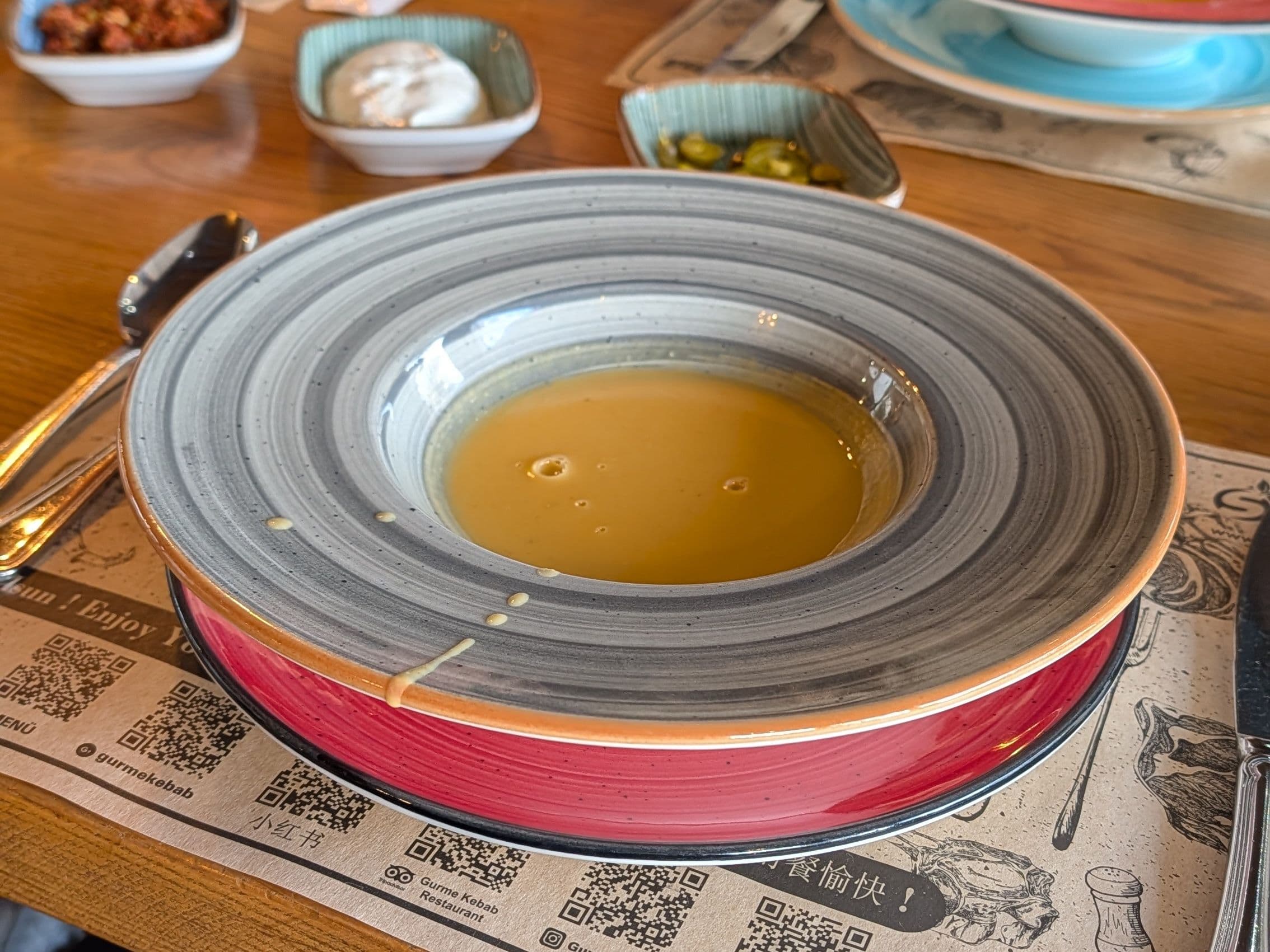
Right there on the placemat beneath my bowl of soup, alongside a friendly "用餐愉快!", were QR codes linking directly to the restaurant's social media. But one of them was specifically printed as 小红书 (Xiaohongshu).
Xiaohongshu is not just another social media app. For Chinese Gen Z and millennial travelers, it is the absolute go-to platform for everything from restaurant reviews to travel aesthetics. Seeing a local kebab shop actively include a Xiaohongshu QR code proves they aren't just translating their menus; they are hyper-targeting this specific, digitally-savvy demographic.
The "Cappadocia Effect" Live in Action
That direct, visual connection to the Chinese market became vividly real that same evening. I walked up to the popular sunset viewpoint just near my hotel, the Kayataş Cave Suites, and spotted a couple nearby. The man was holding a camera, carefully filming the woman as she vlogged to her audience:
大家好,我现在在卡帕多西亚!
Hearing her animatedly explain her experience in real-time was a live look at the "Cappadocia Effect" in action. It is the exact kind of highly visual, aspirational content that goes viral on Chinese platforms like Xiaohongshu and drives even more travelers to book their tickets.
The Catalyst
The clearest explanation for why this is happening right now clicked into place when I visited the towering rock fortress of Uçhisar Castle.
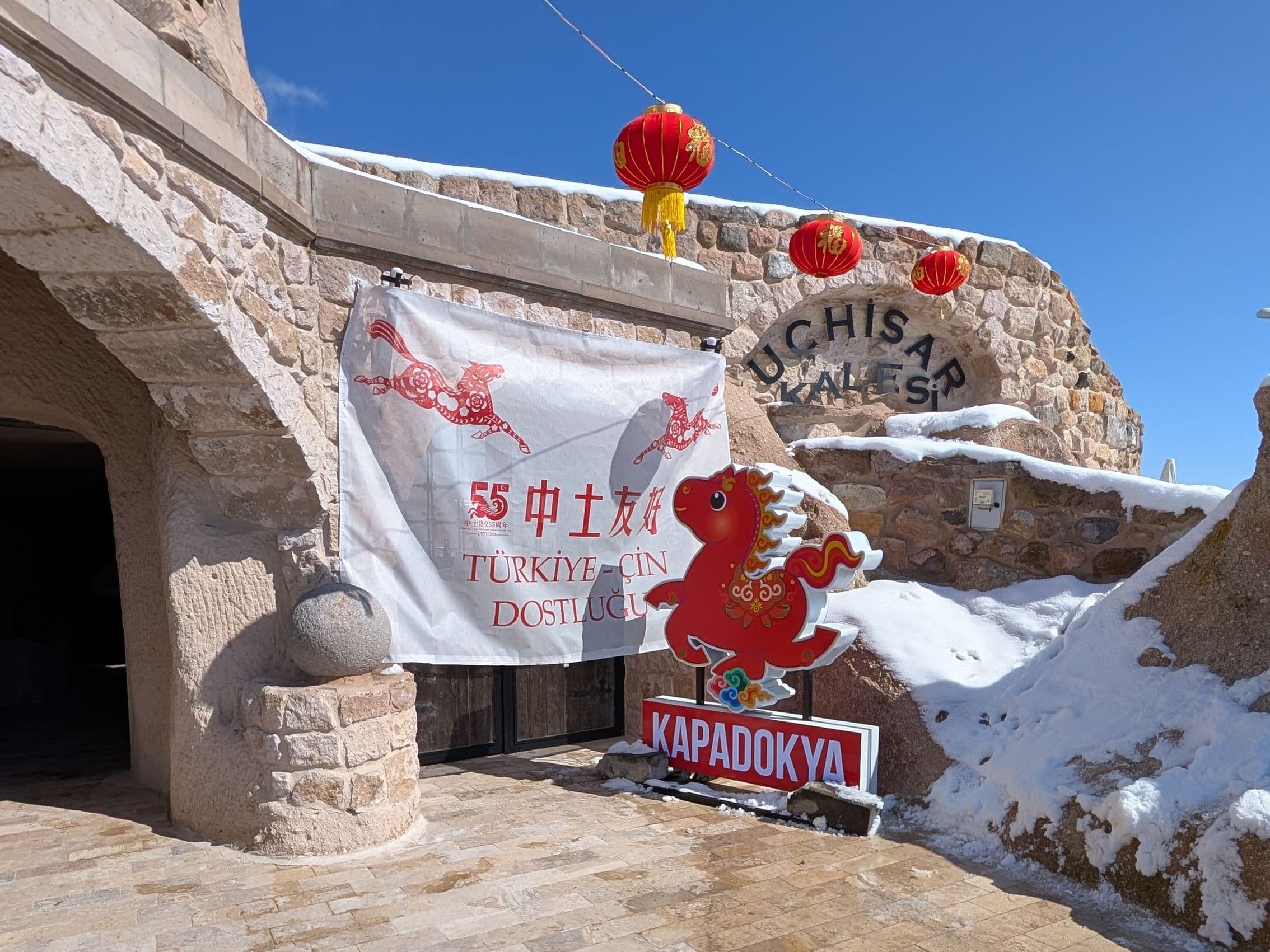
Decorated right against the ancient stone were vibrant red lanterns, a prominent banner reading "55 中土友好" (55 Years of Sino-Turkish Friendship), and a festive red horse mascot with "Kapadokya" written beneath it. That horse isn't just a random decoration—2026 is the Lunar Year of the Fire Horse, making this entire setup a highly targeted, culturally aware welcome.
This tourism boom has actually been building since 2024, when arrivals surged by over 65% post-pandemic. But 2026 poured gasoline on the fire. To celebrate the 55th anniversary of diplomatic relations between the two countries, Turkey officially granted 90-day visa-free entry to Chinese citizens at the start of this year, turning a steady surge into an absolute flood.
Suddenly, the bureaucratic friction of visiting a "European-vibe" destination was completely gone. Combine that frictionless entry with the viral appeal of Cappadocia's fairy chimneys and hot air balloons, and the massive wave of travelers makes perfect sense.
It was fascinating to witness firsthand how quickly a local economy adapts to a new demographic. Finding a slice of familiar characters, language, and cultural nods an ocean away in Turkey was a vivid reminder of how quickly global travel currents can change.