
I spent seven months bouncing between hospitals for severe wrist pain, got an MRI showing a ligament tear, survived a motorcycle scare, and narrowly avoided wrist surgery. The actual root cause? A muscle knot from using my pinky to hold my smartphone. Fixed by a sports doctor and one agonizing acupuncture session.
We all do it without thinking. You’re scrolling through your feed, reading an article, or firing off a message, and without realizing it, your pinky finger has curled underneath the bottom edge of your phone to act as a makeshift shelf.
For a long time, I thought nothing of it. In fact, when a faint, dull ache in my wrist slowly evolved into a persistent, nagging pain, my smartphone was the absolute last thing on my mind. I was entirely convinced I was dealing with a series of sports injuries and dramatic accidents.
This is the story of how a seemingly harmless modern habit sent me into a frustrating, seven-month loop of hospital visits across Jakarta, and how a surprising—and agonizing—treatment finally solved a medical mystery I didn't even fully understand.
Chapter 1: The Medical Maze
My medical maze officially began in late 2025. In November, I was trekking at Curug Cibaliung, Sentul, and had a minor slip where I had to awkwardly brace myself. About two weeks later, a faint, dull ache appeared in my left wrist. I figured it was just a lingering sprain from the hike, but it quickly escalated into a full-blown medical debugging session.
My first stop was an Orthopedic Surgeon (SpOT) who suspected unexplained inflammation. I was given a Triamcinolone corticosteroid injection, hoping it would be the silver bullet. It wasn't.
A month later, I sought a second opinion. The doctor performed a piano key test (joint instability check). I passed it, but was still prescribed endless ice packs, dietary restrictions, and a referral for physiotherapy.
I went to see a Physical Rehabilitation Specialist (SpKFR) and she did some therapies: shockwave therapy (ESWT), ultrasonic treatments, electrical nerve stimulation (TENS), and kinesio taping.
When the pain persisted, another doctor ordered an immediate MRI. The results sounded terrifying: "Complete disruption at the styloid ulnar attachment... Palmer classification 1c - TFCC injury."
The TFCC (Triangular Fibrocartilage Complex) is the cartilage that acts as a shock absorber for your wrist.
Hearing it was torn was daunting. My orthopedic surgeon immediately laid out the option for wrist arthroscopy (a minimally invasive surgery using a tiny camera to look inside the joint).
I decided to pass on going under the knife right away. Exhausted by the endless hospital visits, I opted to continue physio until a therapist mentioned I could actually return to the gym if I focused on strengthening my forearms. So, I stopped going to rehab, decided to train my forearms myself, and tried to just live with it.
It’s incredibly frustrating to invest time and energy into hospital visits—enduring needles, MRI tubes, and endless ice packs—only to feel like you aren't actually getting any better.
Chapter 2: The Migrating Pain
A month later, I was traveling in Cappadocia, Turkey, when I had a minor motorcycle incident. The bike tipped and almost fell entirely to the right side. I had to use my right hand to brace the full, heavy weight of the machine, successfully keeping it from hitting the ground.
Then, something genuinely bizarre happened.
The lingering pain in my left wrist magically vanished—and completely relocated to my right wrist.
At the time, I didn't even know what to do. Should I go back to my doctors in Jakarta and tell them the pain literally moved? I assumed it was just a logical consequence. My right hand had just wrestled a falling motorcycle; of course it was going to hurt. The pain would come and go, so I mostly ignored it.
Chapter 3: Padel, X-Rays, and the Gut Check
I managed the intermittent pain until early July. On July 3rd, an intense game of padel pushed my right wrist over the edge. I decided it was time to get it fixed properly.
I went back to my orthopedic surgeon at Siloam Hospital. He did another piano key test (passed again) and ordered an X-ray. This time, the diagnosis was a DRUJ (Distal Radioulnar Joint) issue, with a measured gap of about 6.9mm between the bones. He mentioned arthroscopy again but ultimately recommended wearing a rigid wrist brace and returning to physiotherapy.
But as I sat in the clinic, my gut was screaming at me.
When the prescribed solution for a new joint issue feels like an exact, failing copy-paste of your previous injury's treatment plan (the endless cycle of MRIs, injections, and TENS machines), it’s time to seek a different medical perspective.
I decided to skip the rehabilitation specialist entirely. I needed to look outside traditional orthopedics.
Chapter 4: The Unexpected Plot Twist
A few days later, I booked an appointment at MOTIVA clinic to consult with a Sports Medicine Specialist (SpKO), dr. Veranika.
During the consultation, I laid out my medical history: the dramatic motorcycle save, the padel flare-up, and the DRUJ diagnosis on my X-ray.
She examined my mechanics, and then asked about my daily habits—specifically, how I held my phone. She performed a manual muscle test by applying a specific sensoric trigger (physical pressure) to my right hand, and then asked me to hold a completely unrelated muscle: hamstring.
Instantly, my hamstring gave out. I completely lost my strength.
In sports medicine, this is a diagnostic test for neuromuscular inhibition. By triggering the hyper-stressed nerve in my hand, my brain registered a massive sensory error and essentially "short-circuited," temporarily shutting down power to my hamstring. It proved the bug wasn't just local to my wrist; it was corrupting my body's entire neurological network.
That’s when the unexpected plot twist was revealed. It wasn't the rugged motorcycle save. It wasn't the padel match. It was my smartphone.
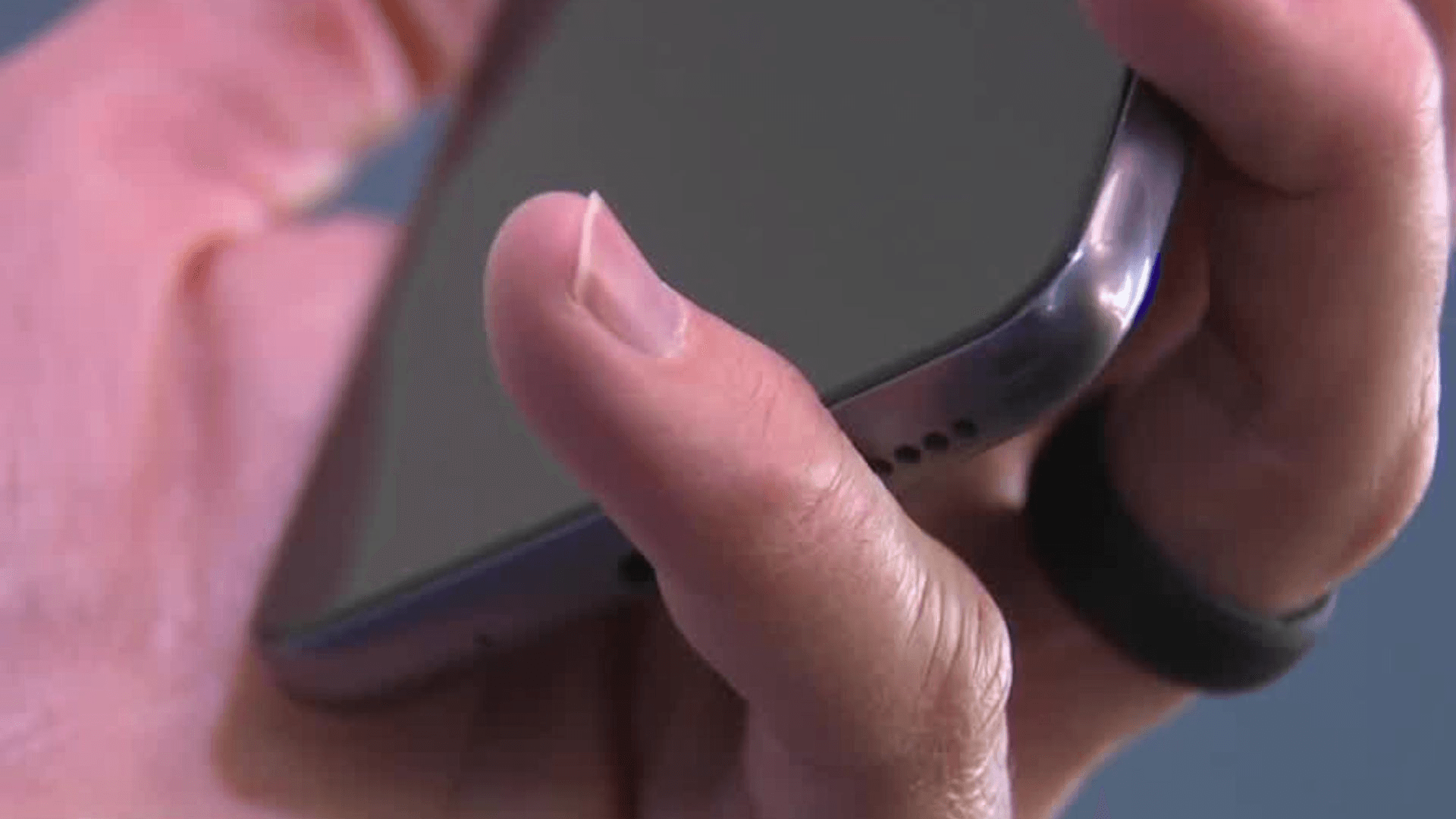
She found the real culprit: a stubborn muscle knot (trigger point) hiding right inside my right palm, specifically on the pinky side. The root cause? My relentless habit of using my pinky to support the weight of my phone.
The constant, isometric strain on that tiny tendon forces the fascia and surrounding muscles across your hand to overcompensate until they simply lock up.
The padel and the motorcycle didn't break my wrist; they just aggravated a mechanical knot that had been tightening gigabyte by gigabyte, scroll by scroll.
The Most Painful Acupuncture of My Life
To break the cycle and release the knot in my palm, she recommended acupuncture.
If you’ve never had medical acupuncture to break up a deep trigger point, buckle up. It isn’t a spa day where needles rest gently on your skin.
When the needle hit the exact spot of the knot inside the pinky side of my right palm, I nearly jumped off the table. Let me be unequivocally clear:
It was the most painful acupuncture I have ever had in my life.
It sent a sharp, intense shockwave through my hand, followed by a strange, dull twitch. But right after that excruciating peak, there was a warming sensation of release. It was as if a tightly coiled spring inside my palm and forearm had suddenly unspooled. Seven months of accumulated tension finally let go.
The Takeaway
As I sit here writing this post, my wrist is finally recovering. The deep, mechanical ache is fading, though I’m currently nursing a bruised, tender soreness on the pinky side of my right palm from the acupuncture. It’s a completely normal aftereffect that should disappear in two or three days, but it serves as an excellent physical reminder of my own stubborn habits.
This seven-month journey from MRIs, steroid shots, and canceled arthroscopies to padel courts and agonizing acupuncture taught me a humbling lesson about ergonomics.
As software engineers, we spend so much time optimizing our tech stacks, our architectures, and our workflows, but we rarely optimize how our physical bodies interact with them.
Stop using your pinky as a phone stand. Invest in a grip, use two hands, or simply put the phone down. Your joints—and your pain tolerance—will thank you.